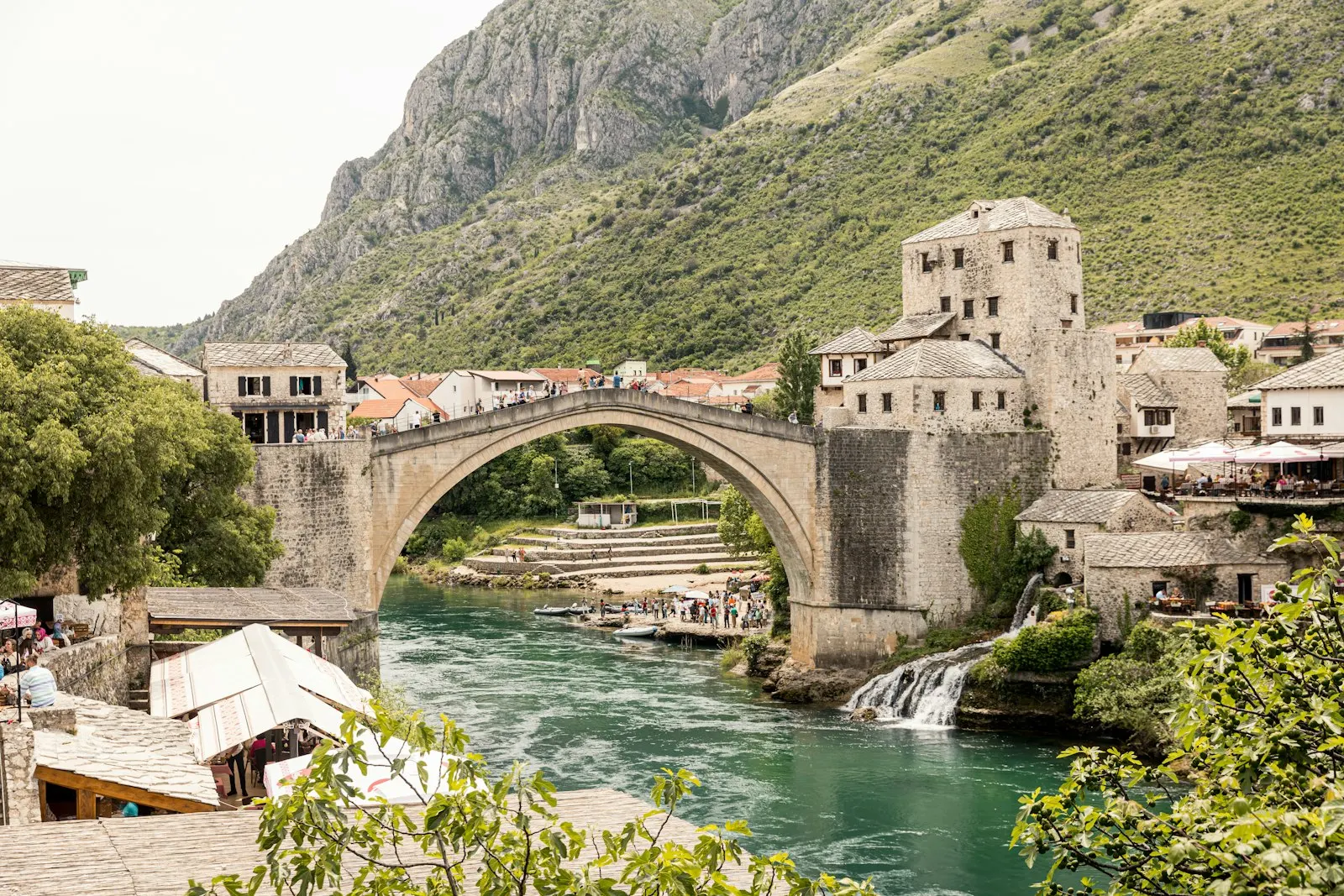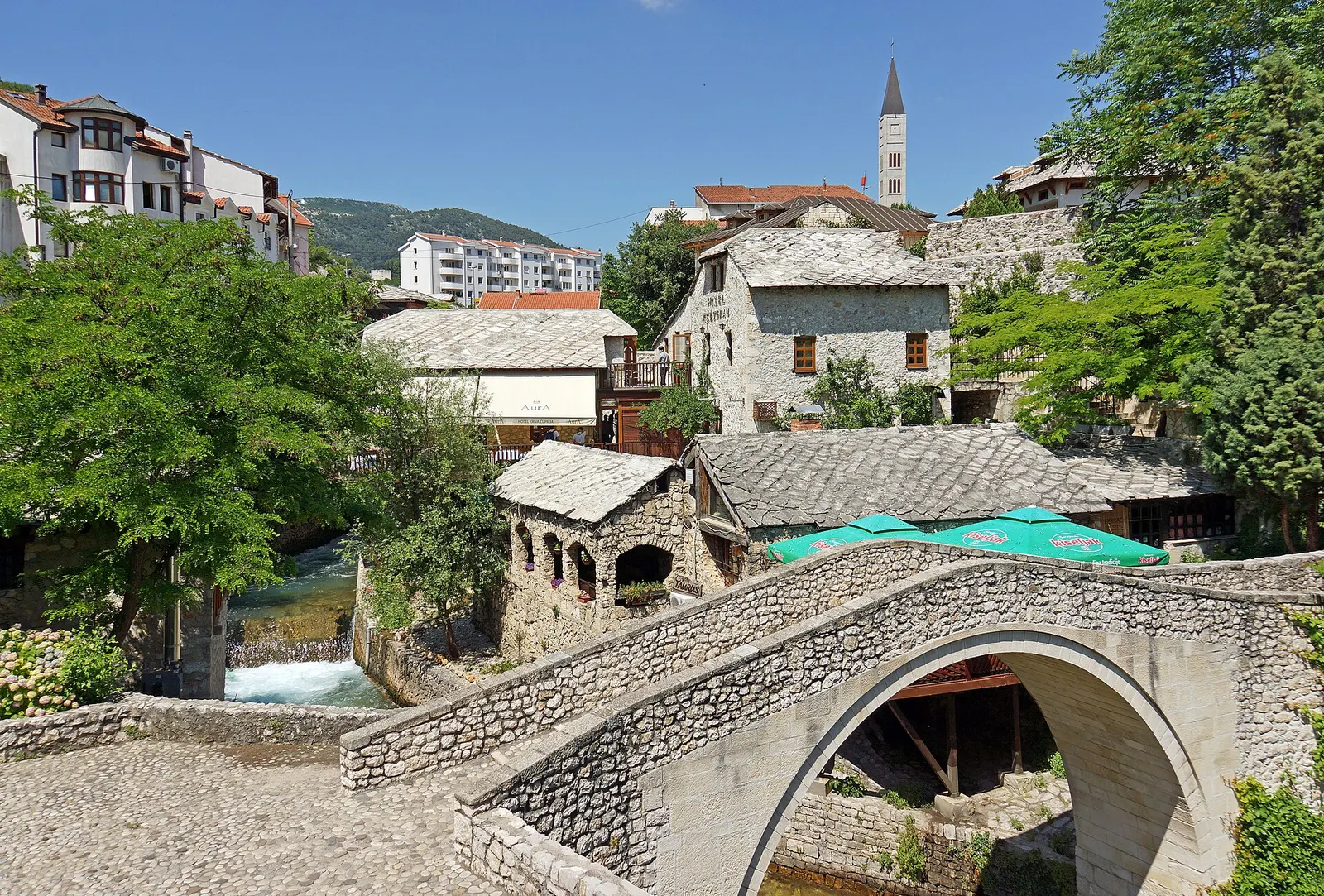
Built during the Ottoman period, it is generally dated to the mid-16th century and is already mentioned in an endowment deed of 1558, which makes it one of the oldest surviving structures in the city. Its semicircular arch, about 8.5 metres wide and just over 4 metres high, looks like the Old Bridge in miniature, and local tradition holds that it served as a model for its larger neighbour. The bridge came through the war of the 1990s with damage, only to be swept away by floods in December 2000. It was rebuilt in a UNESCO project funded by Luxembourg and completed in 2001.
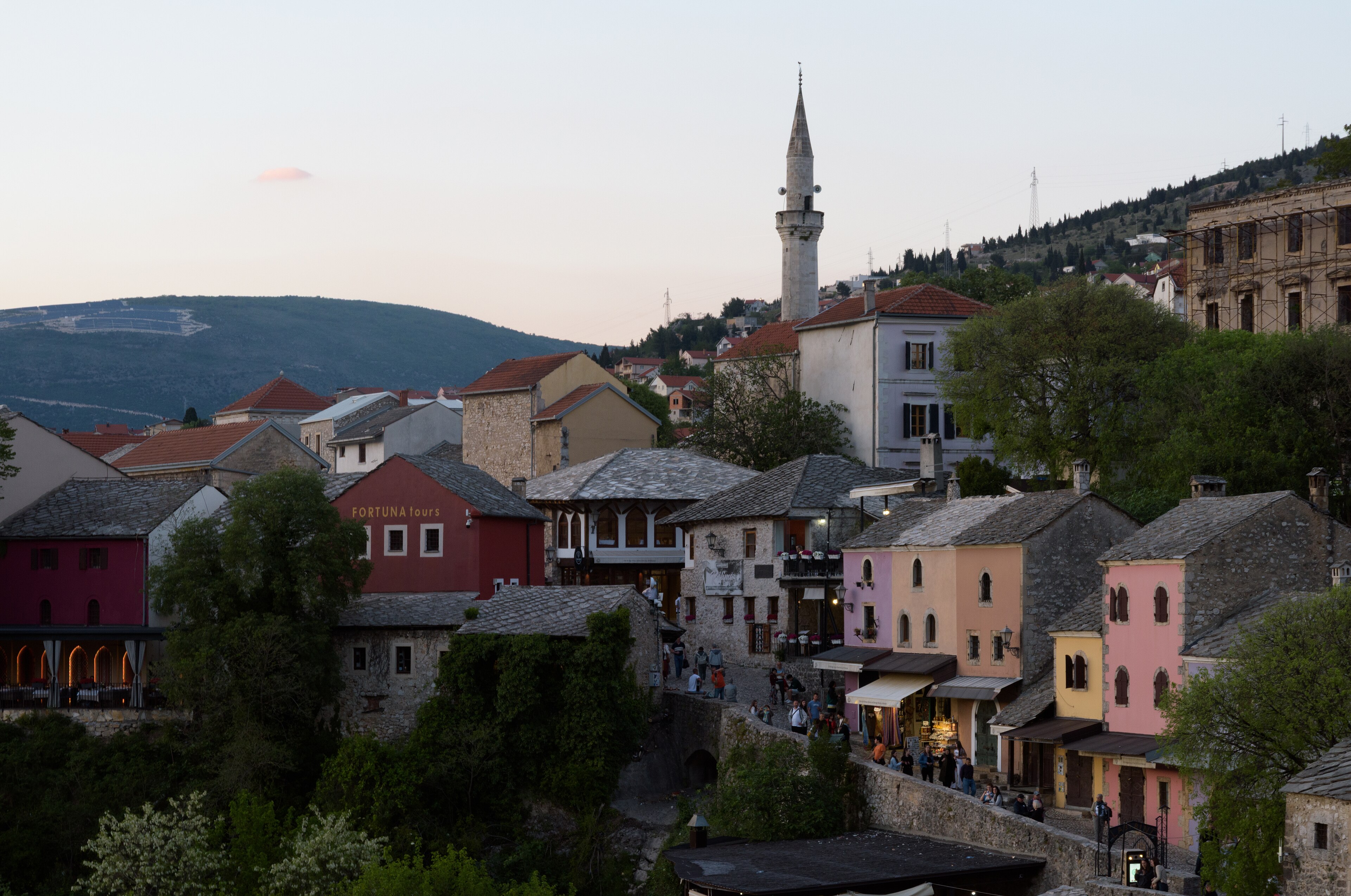
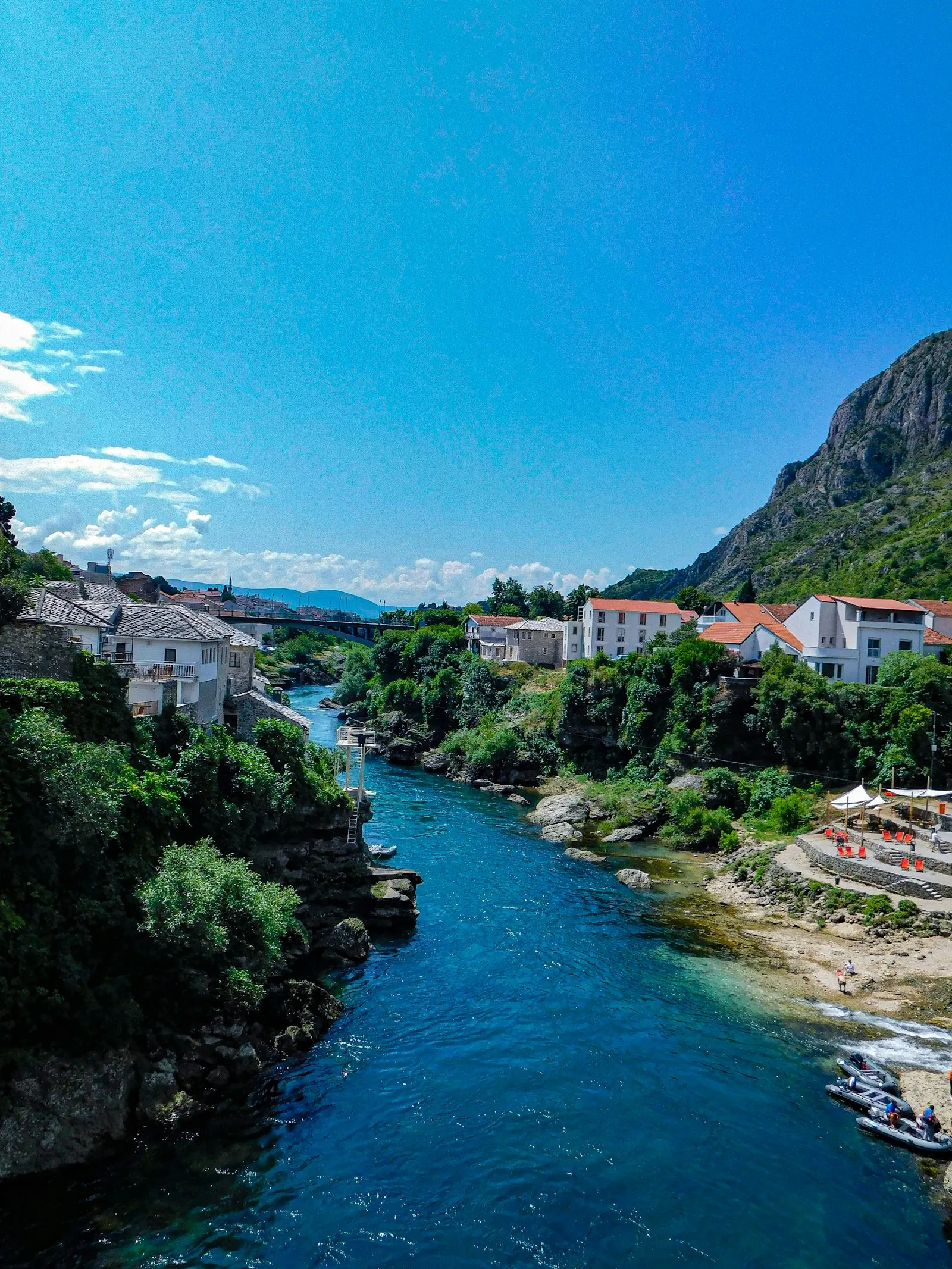
Today it forms part of the historic core around the Old Bridge, a UNESCO World Heritage Site. Stone steps climb to its paved crown from both banks, and the little Radobolja valley, with its old stone houses and leafy restaurant terraces, is one of the most charming corners of Mostar. It is especially atmospheric in the soft light of early morning or evening, when the tour groups thin out.
Pause here for a quieter, more intimate view of Mostar’s Ottoman heritage.