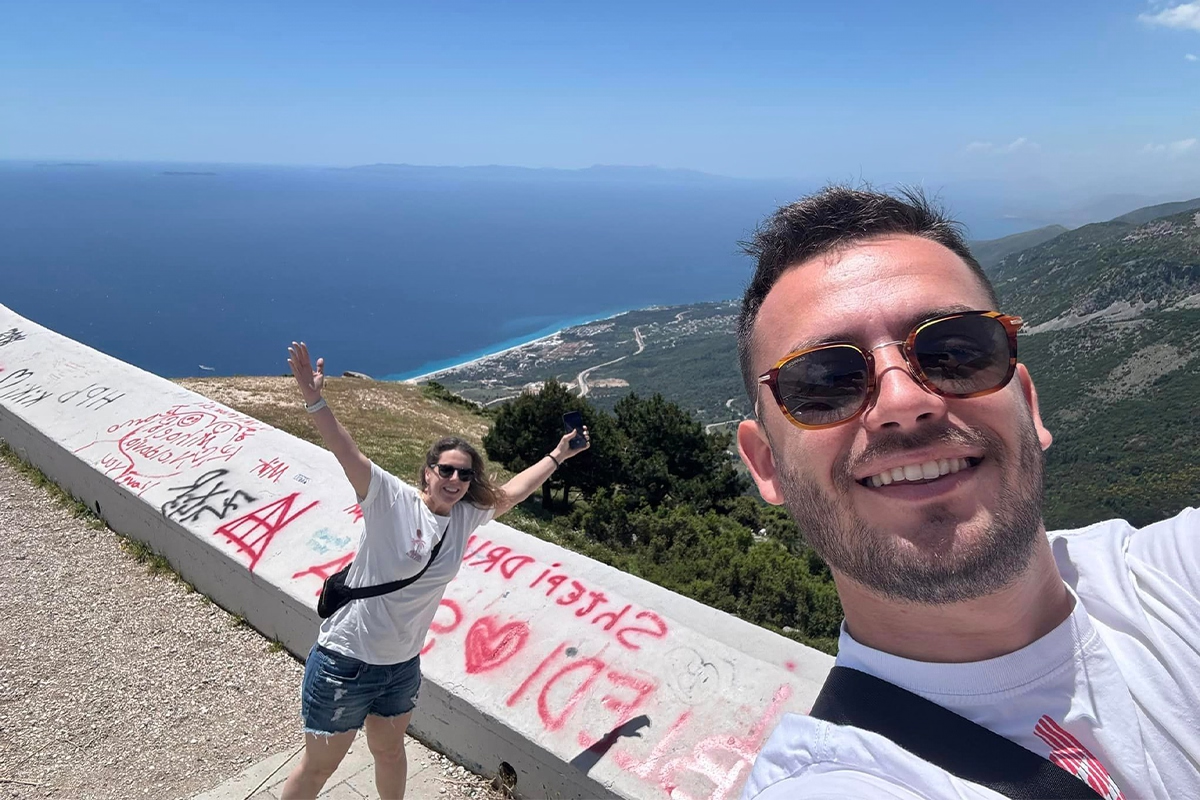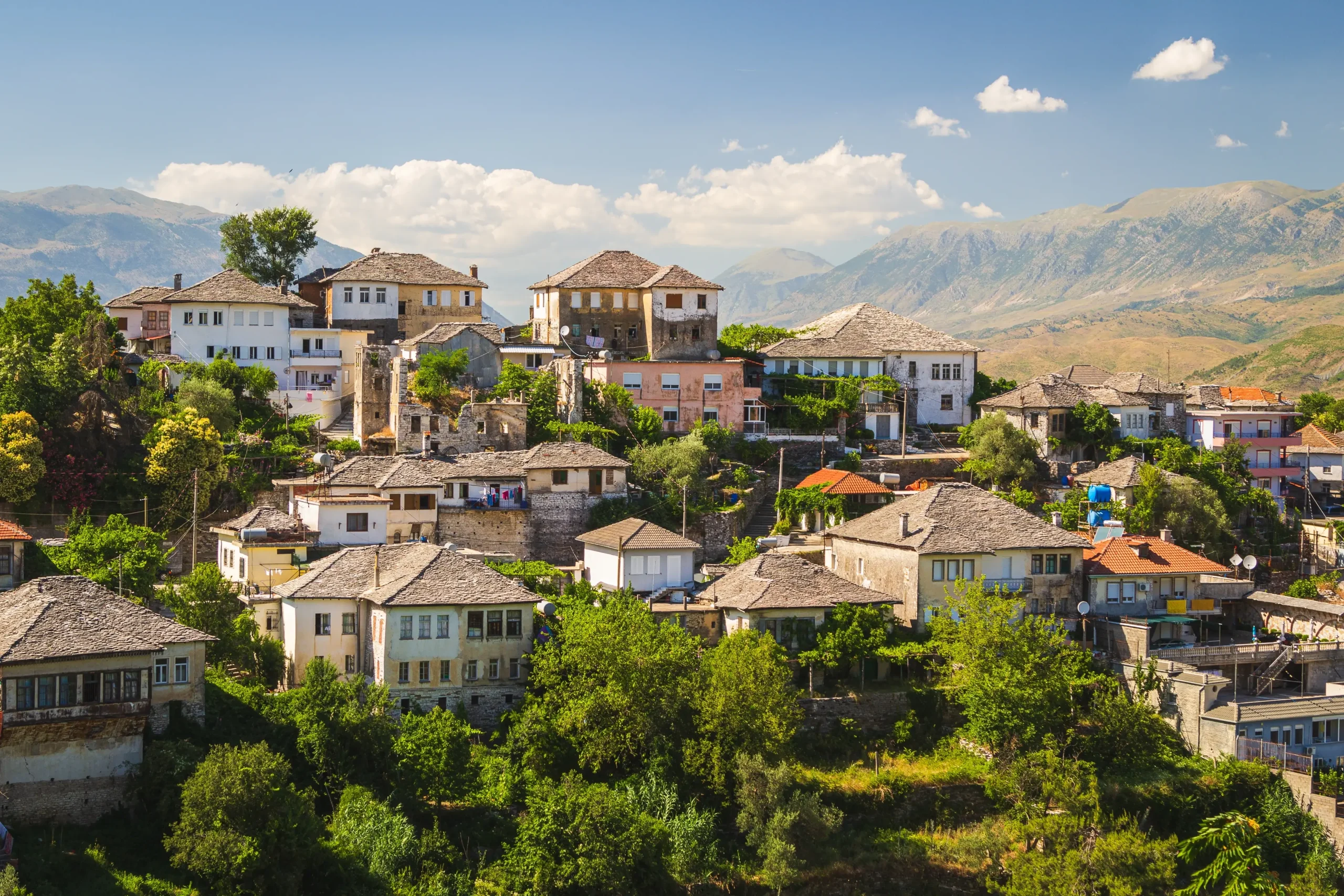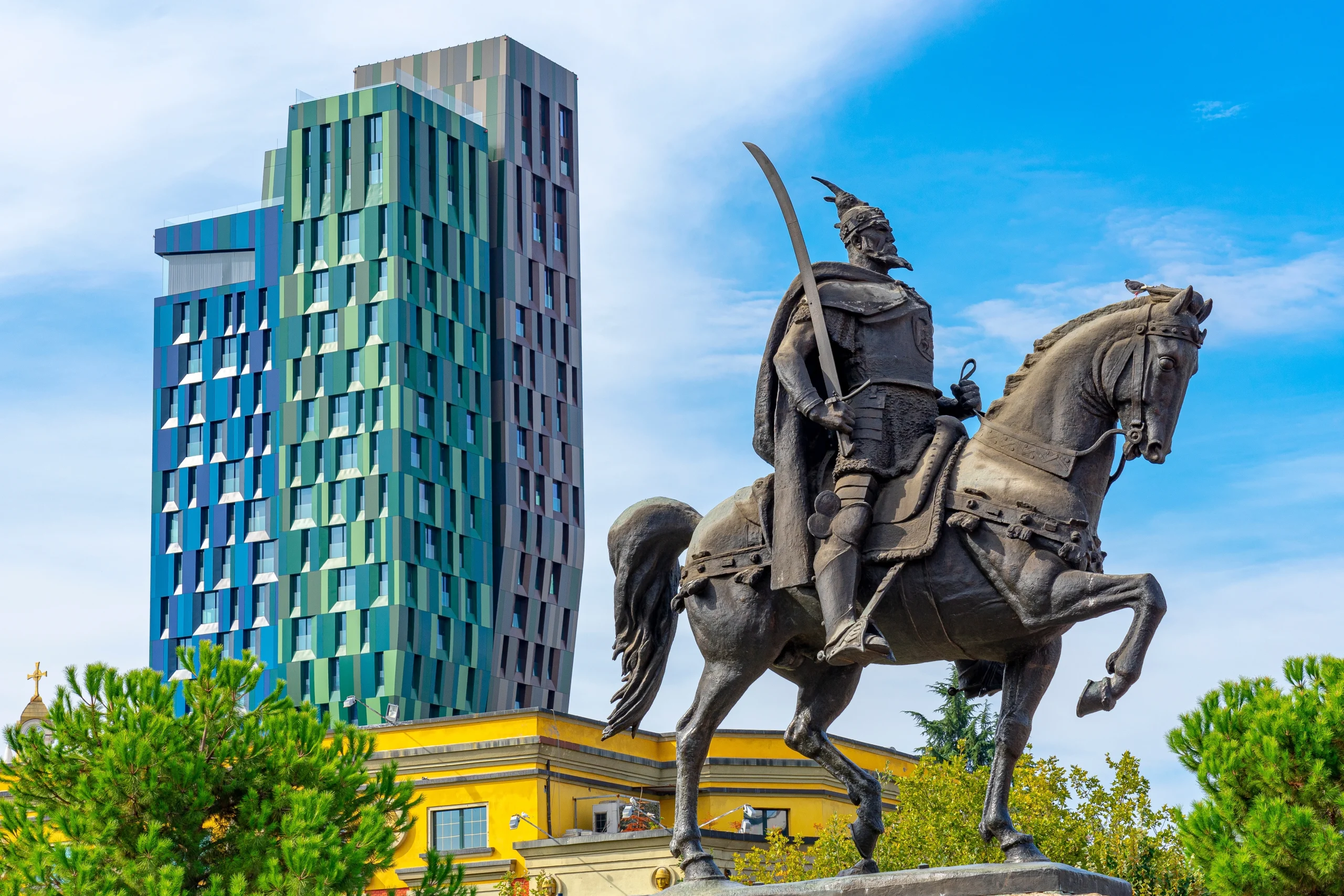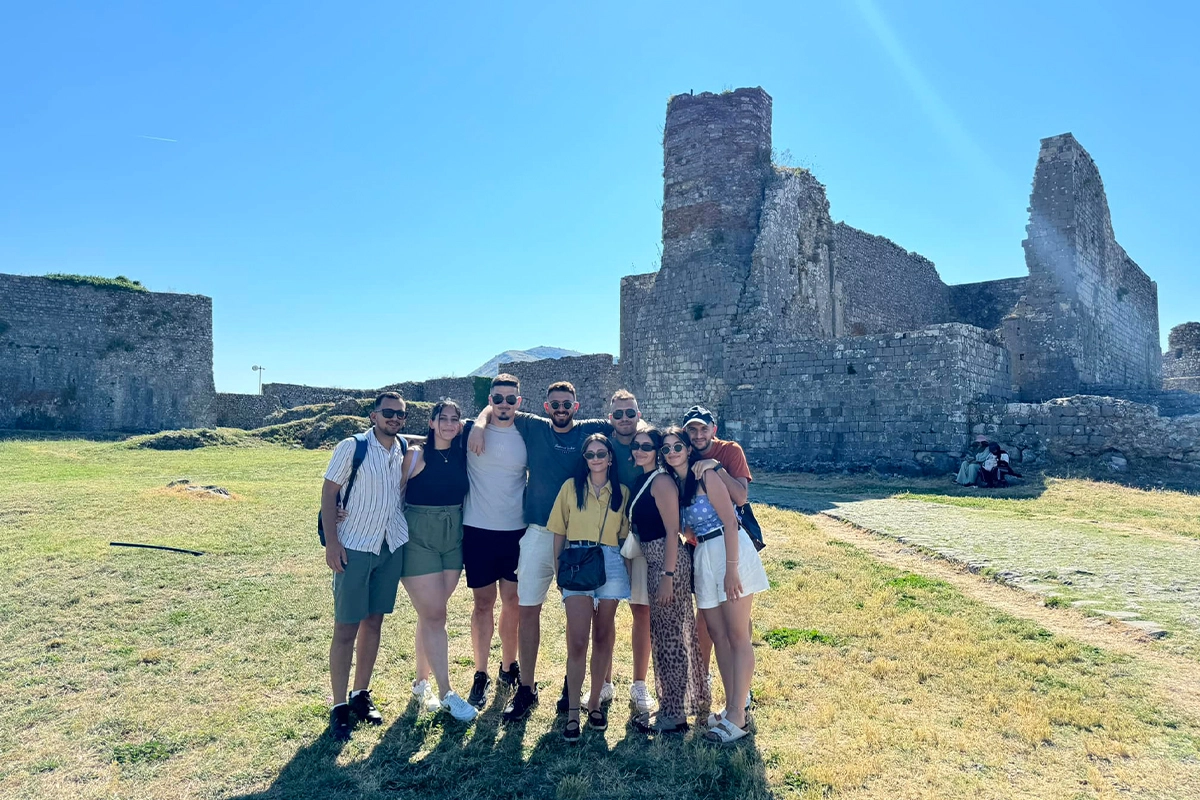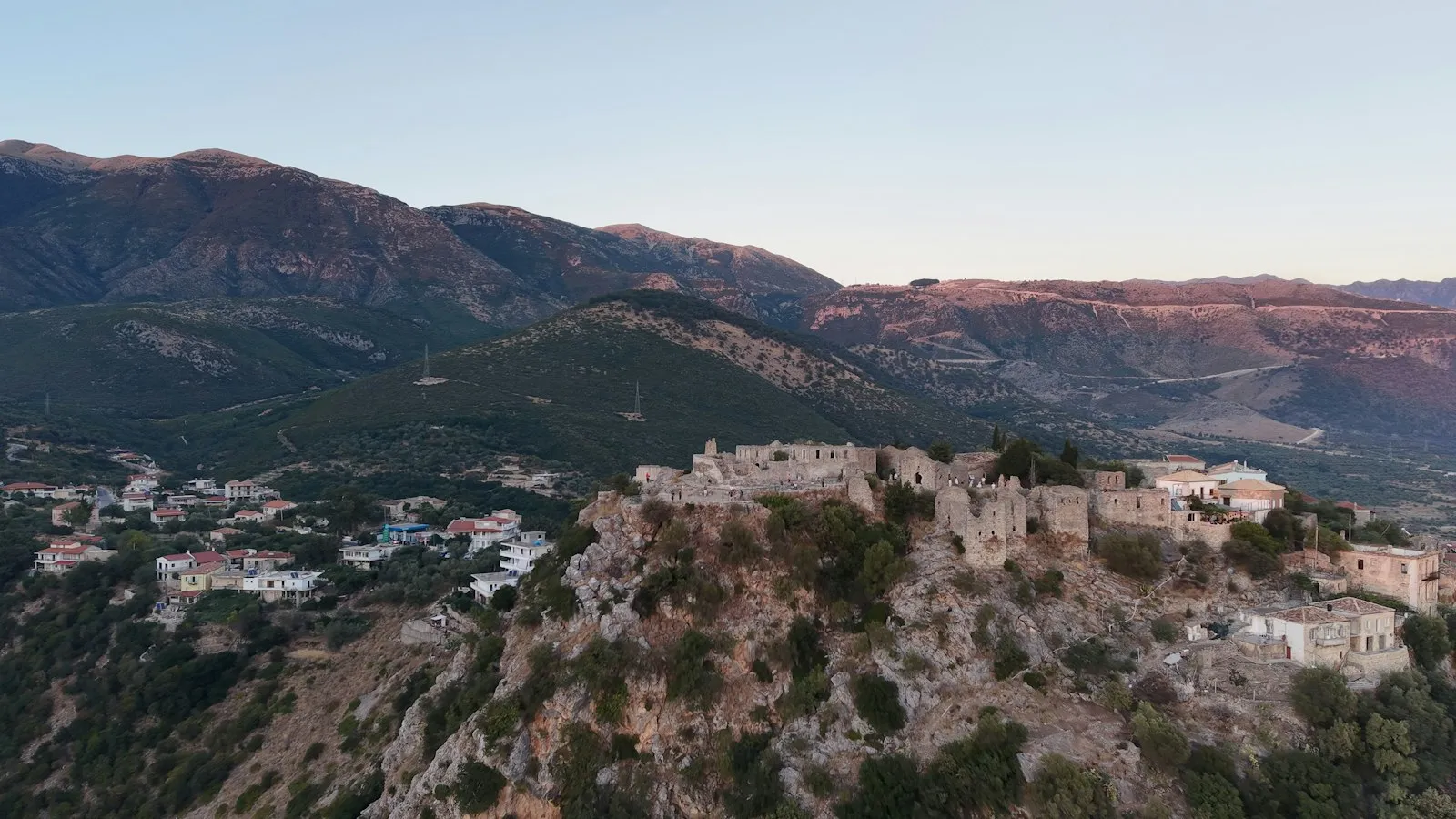
The old Albanian Riviera villages of Qeparo, Vuno and Himarë sit on the hillsides above the coast, a world away from the beach bars below. Each offers stone lanes, Orthodox churches, castle ruins and wide views over the Ionian Sea, and each can be explored on foot in a few hours.
Most visitors drive straight past them on the coast road between Vlorë and Sarandë. Stop, and you will find a quieter, older side of the Albanian Riviera. This guide covers what to see in each village, how to get around and how to visit respectfully.
Hilltop villages and beach villages
For centuries, people on this stretch of coast built their homes on high ground, where settlements were easier to defend. Many villages still have two parts: an old hilltop core and a newer settlement down by the sea.
The shift towards the shore came in the second half of the 20th century. In Qeparo, for example, a new coastal road and water supply built after 1957 drew families downhill, creating the split between Old (Upper) and New (Lower) Qeparo that you see today. After 1991, emigration – much of it to Greece – emptied many of the older houses.
Today the beach villages host most of the hotels, while the upper villages are quieter, partly abandoned and slowly being restored. The Himarë area is also notable for its mix of Albanian- and Greek-speaking communities, and you will hear both languages in its villages.
Qeparo: the best-preserved old village
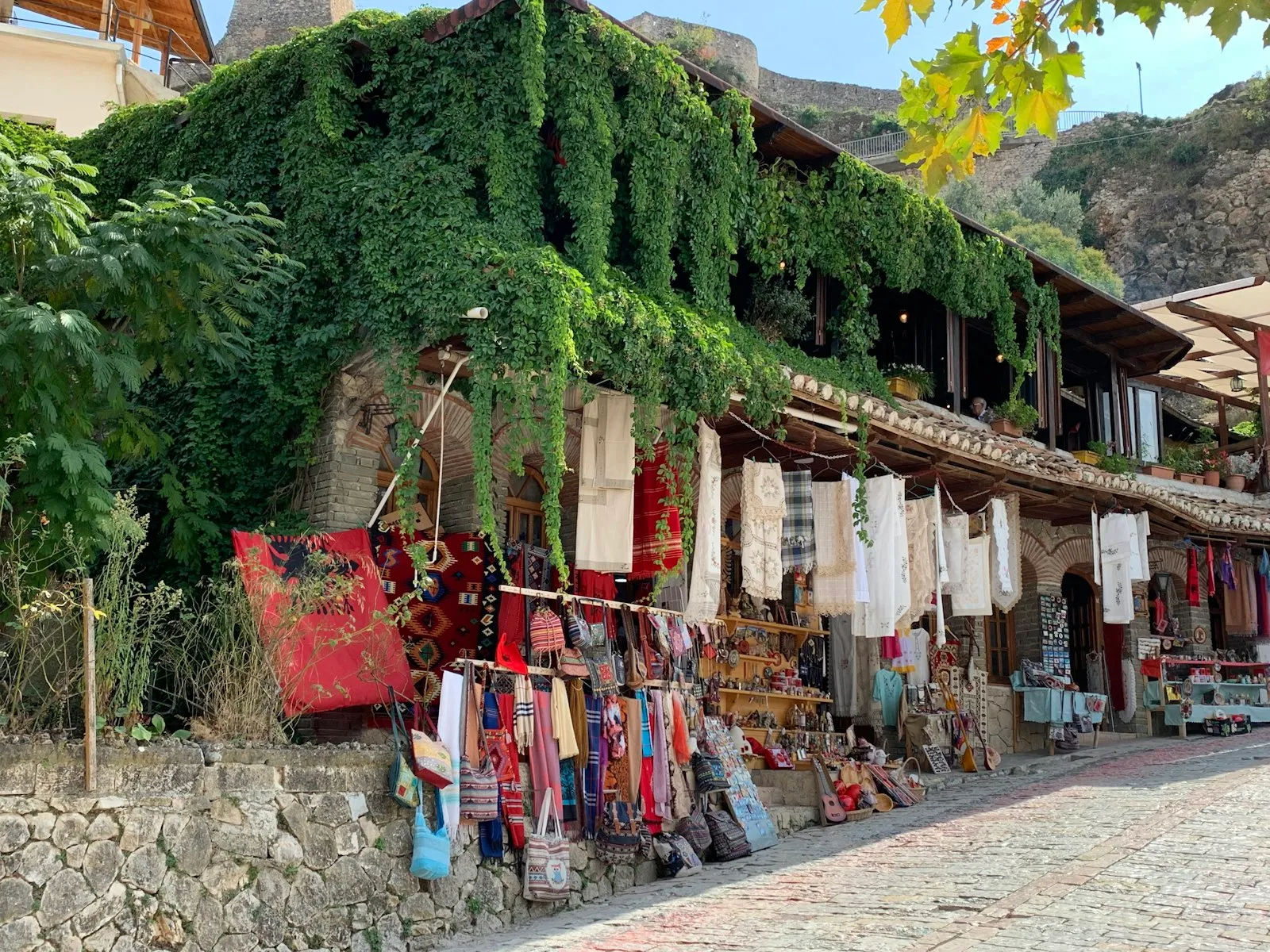
Old Qeparo clings to the mountainside above its modern namesake, between Himarë and Borsh. It is one of the most atmospheric villages on the coast, with thick-walled limestone houses, small windows, arched gateways, cobbled lanes and old water fountains with dated plaques. Many houses stand empty, but some have been carefully restored.
What to see
- St Mary’s Church: its bell tower, dated 1796, rises above the rooftops in the village centre.
- St Demetrius: a monastery church built in 1760.
- Karos: a short trail from the northern end of the village leads through olive groves to the ruins of Karos fortress, whose oldest walls date back to the Late Bronze and Early Iron Ages. On a clear day you can see Corfu from here.
Getting up
A narrow sealed road with hairpin bends climbs from the coast; park at the edge of the village, as the lanes are for walking only. On foot, the roughly 2.4 km climb from the main road takes around 40 minutes. There is no cash machine in the upper village, so bring cash for its small restaurants.
Vuno: stone lanes above Jalë
Vuno spills down a hillside on the coast road between Himarë and Dhërmi. Its tiered stone houses, steep alleys and sea views make it one of the prettiest stops on the Riviera, and its small population grows in summer as guesthouses open.
Look for the churches of St Spyridon, dating from 1778, and St Mary, from 1783, though like many village churches here they are not always open. Vuno has a long tradition of schooling, and its former school building has in recent years been used as a summer hostel – a sign of how old buildings are finding new life.
Below the village, a side road winds down to Jalë beach, and the canyon beach of Gjipe lies a little further north. Vuno makes a peaceful base if you want to combine beach days with evening walks through a real village.
Himarë: a castle quarter above the bay
Himarë is the Riviera’s main town, with a busy seafront at Spile and beaches such as Livadhi nearby. Above it, on a rocky hill, lies the old town – known locally as Kastro – built around Himarë Castle, whose origins go back to antiquity.
Inside the walls you can wander between stone houses and churches, including the Church of All Saints near the castle entrance, and take in wide views over the bay. Under Ottoman rule, Himarë negotiated unusual privileges, including a degree of self-government and the right to bear arms, and its people revolted several times.
South of town, the fortress at Porto Palermo, associated with Ali Pasha, guards a sheltered bay and makes an easy stop on the drive to Qeparo. It is usually open to visitors, with shorter hours outside the summer season.
Dhërmi and the mountain villages
North of Vuno, the old village of Dhërmi sits on the slope above its famous beach. It has several churches, including St Stephen’s and the Panagia monastery church, while the Monastery of St Theodore stands on a hill at the end of the beach.
Inland from Himarë, the mountain villages of Pilur and Kudhës are renowned for iso-polyphony, the haunting multi-part folk singing recognised by UNESCO as intangible cultural heritage. The roads are narrow and winding, so a local driver or guide makes the trip far easier.
Getting around and when to go
The SH8 coast road links Vlorë with Sarandë via the Llogara Pass, passing close to all three villages. A car gives you the most freedom, though village lanes are narrow and parking is limited, so leave the car at the edge and walk in. Buses run along the coast between Vlorë, Himarë and Sarandë, but services are less frequent outside summer, so check locally.
Footpaths link some villages with beaches and hilltops, such as the trail from Upper Qeparo to Karos. Spring and autumn are the best seasons for walking; in high summer, set out early to avoid the midday heat, and remember that many guesthouses and restaurants close in the off-season. For a full route along the coast, see our one-week Albanian Riviera road trip guide.
How to visit respectfully
These are living communities, not open-air museums, and a little courtesy goes a long way:
- Greet people with a friendly “mirëdita” (good day) and ask before photographing anyone.
- Do not enter empty or ruined houses – they are private property and can be structurally unsafe.
- Dress modestly in churches, cover shoulders and knees, and respect locked gates.
- Park outside the village and walk in, as lanes are narrow and used by residents.
- Take your rubbish with you, because litter is a problem in some places.
- Spend locally: eat in village restaurants and buy honey, olive oil or cheese from local producers when you can.
Frequently asked questions
Which old village on the Albanian Riviera is most worth visiting?
If you only have time for one, choose Old Qeparo. It has the most complete collection of traditional stone houses, an 18th-century church, peaceful lanes and a short walk to the ruins of Karos fortress with sea views. Vuno is the easiest to combine with beach time at Jalë, while Himarë’s castle quarter adds history and big views over the bay.
How do you get to Old Qeparo?
Upper Qeparo sits above the coastal village of Lower Qeparo, between Himarë and Borsh. You can drive up a narrow, sealed road with hairpin bends and park at the edge of the village, or walk the roughly 2.4 km from the coast road in about 40 minutes. Wear sturdy shoes, as the lanes are steep and uneven.
Are the old Riviera villages abandoned?
Partly. Many families moved down to the coast or emigrated, particularly after 1991, so some houses are empty or in ruins. However, the villages are still home to residents, and a growing number of houses have been restored as homes or guesthouses. Treat them as living communities and avoid entering empty buildings.
Do I need a car to visit the villages?
A car is the most flexible way to visit, especially for hill villages such as Upper Qeparo, but it is not essential. Coastal buses stop near the lower villages, from where you can walk up, and taxis are available in Himarë. A guided tour of the south is another easy option if you would rather not drive mountain roads.
When is the best time to visit the Riviera villages?
Late spring and early autumn are ideal: the weather is warm, the sea is often pleasant for a swim, the light is soft for photography and walking is comfortable. July and August are hot and busy on the beaches, though the upper villages stay relatively quiet. In winter many guesthouses and restaurants close, so check before you travel.
Explore the Riviera with us
Want to see the coast with an expert guide? Our Tour of South Albania in 4 Days travels via Berat, Gjirokastër, Ksamil, Butrint and the Riviera, and if you would like more time in the villages, send us a private tour request and we will help you tailor the route.